41.8 F
Brookline
Sunday, December 21, 2025
Home Blog Page 55

Deb Goldberg Defeats State Sen. Barry Finegold & State Rep. Tom Conroy

Deb Goldberg has won a three-way Democratic primary for Massachusetts state treasurer.

The former Brookline selectwoman defeated state Sen. Barry Finegold of Andover and state Rep. Tom Conroy of Wayland in Tuesday’s voting.

Goldberg will face off with Republican nominee Michael Heffernan of Wellesley in the November election. Ian Jackson of the Green-Rainbow party will also be on the ballot.

Goldberg’s family founded the Stop & Shop supermarket chain and she previously served in executive positions with the company.

Goldberg has made expanding the state’s financial literacy program a centerpiece of her campaign. She says all Massachusetts residents should have the information they need to avoid falling into debt or foreclosure.

She ran unsuccessfully for lieutenant governor in 2006.


Whole Foods Donating Portion Of Sales To Brookline Education Foundation

Based on a poll of Whole Foods Facebook fans, Brookline Education Foundation has been chosen as the recipient of 5 percent of the Beacon Street Whole Foods’ pretax sales on Monday, September 15, 2014.

“We are so grateful to Whole Foods Market for giving our supporters a way to help the Brookline public schools by doing what they need to do anyway — shop for groceries,” BEF Executive Director Kathleen Sheehy said in a statement.

Whole Foods Market’s quarterly 5% Days give back to local communities by providing money to nonprofit organizations whose programs directly benefit the communities surrounding their stores.

The BEF is a nonprofit dedicated to preserving Brookline’s commitment to excellence in public education. The BEF raises private funds to support innovative teaching, administrative leadership, professional development and community participation in Brookline public schools, from Pre-K to grade 12.

For more information about the BEF, please visit here.


Understanding Brookline: A Report on Poverty

In 2014, Brookline Community Foundation (BCF) launched the Understanding Brookline: A Report on Povertya follow up to Understanding Brookline: Emerging Trends and Changing Needs.

The finding that has garnered the most attention from the first Understanding Brookline report is the 13% poverty rate (based on the 2010 U.S. Census) in Brookline. Understanding Brookline: A Report on Poverty explains who makes up the 13%, what factors cause financial stress, and highlights Brookline agencies already addressing poverty and the resources they currently provide.

To engage the community in a discussion of the report’s findings, BCF hosted an Understanding Brookline forum at the Brookline Teen Center on February 26, 2015.


Massachusetts Senior Action Council Meets In Brookline

The Massachusetts Senior Action Council (MSAC) held three informational meetings in Brookline recently at which community organizer Justin Rose and state board member Joan McCabe, both of whom are Brookline residents, held presentations at the Brookline Senior Center organized by Director Ruth Ann Dobek; at the Hebrew Senior Life residences at 100/112 Centre Street organized by Program Coordinator Laura Baber; and at 1550 Beacon Street organized by Program Director Gale Doane.

The Massachusetts Senior Action Council is a democratic, senior-run organization, and is committed to empowering seniors and others to act collectively to promote the rights and well-being of all people, particularly vulnerable seniors.

MSAC was started in 1980 and has had a history of successful advocacy work at the local, state and federal levels over the past 34 years.

The presenters said that MSAC is widely considered to be one of the most effective statewide senior advocacy organizations in the U.S. It currently is working on major issue campaigns in the areas of health care, housing, transit and strengthening of the Social Security, Medicare and Medicaid programs as well as substantial ongoing work on a variety of other issues.

It has six active local chapters in Boston, Cambridge, North Shore, Metro North, Bristol County and Springfield. The main office of MSAC is at 150 Mt. Vernon Street, Dorchester, 617-284-1234.

Brookline residents interested in more information on MSAC may contact the main office or community organizer Justin Rose, 617-756-8518, or state board member Joan McCabe, 617-738-0829.


Nancy Daly & Benjamin Franco Elected To Brookline Board Of Selectmen

Voters in the race for Brookline’s Board of Selectmen elected Benjamin A. Franco, a member of the town’s Advisory Committee, and incumbent Nancy A. Daly on Tuesday, according to unofficial results posted online by the town clerk. Daly and Franco easily bested Brooks A. Ames and Arthur Wellington Conquest III, who unofficially partnered to run on a pro-diversity ticket and each received fewer than 900 votes.

Daly and Franco garnered nearly 3,000 votes each. Races were not contested for seats on Brookline’s School Committee, its public library board of trustees, and the housing authority.


Treasurer Candidate Deb Goldberg Gets Firefighter Support

The Professional Fire Fighters of Massachusetts endorsed state treasurer candidate Deborah Goldberg, a Democrat, on Monday.

The fire fighters are a powerful state lobbying group. The group announced their endorsement at a fire station in Brookline at an event attended by Professional Fire Fighters of Massachusetts President Ed Kelly and Brookline Fire Fighters Local 950 President Paul Trahon.

According to Goldberg’s campaign, she has also received endorsements from two other unions – Teamsters Local 25 and Painters District Council 35 – who cited “her dedication to wage equality and respect for workers.”

Goldberg is a former Brookline selectwoman and one-time candidate for lieutenant governor. Her family founded Stop & Shop supermarkets.

She is competing in the Democratic primary against state Sen. Barry Finegold, of Andover, and state Rep. Tom Conroy, of Wayland.


St. Mary’s & Lower Beacon Streets Shopping

Located just West of the Fenway area of Boston, the St. Mary’s & Lower Beacon Streets area was originally a wetland covered in cedar trees. Gradually logged and filled in for farming, the only evidence of the former landscape is Hall’s Pond just north of Beacon Street at Armory Park – one of only two remaining natural ponds in Brookline. Many older homes surrounding the park are preserved as part of the Cottage Farm Historic District. Beacon Street takes its current appearance from a widening and integration with the trolley line overseen by landscape architect Frederick Law Olmstead in 1887.

Today, St. Mary’s Street area has a mix of independent shops and eateries catering to the students and professionals living in the area. Elephant Walk restaurant is known for its French and Cambodian fusion cuisine in an upscale setting, perfect for a romantic night out. Sol Azteca has been serving up delicious Mexican food since 1974, in a charming setting, combining the brick walls of a classic brownstone, with the white walls and tile patterns of Mexico. Further down the block, Johnnie’s Fresh Market offers grocery shoppers an alternative to chain supermarkets complete with a deli and fresh baked goods. For book lovers, the Boston Book Annex buys and sells books and contains over 100,000 volumes on any just about any subject.

Although it may not be the epicenter for shopping in Brookline, St. Mary’s does offer many services.  There are a number of spas, cleaners, realtors, and banks, including Brookline Bank, available in the St. Mary’s neighborhood. The neighborhood provides a store for fine wines, a fresh market, and the long standing Economy True Value Hardware store.

Getting to St. Mary’s Street from Boston

By subway, take the C “Cleveland Circle” train on the green line to St. Mary’s Street stop. Metered street parking is available on Beacon Street.


Maliotis Cultural Center

Founding and mission

In 1974, Costas Maliotis, a prominent industrialist and philanthropist from Belmont, Massachusetts, who had immigrated to the United States from Crete in 1915, donated the Maliotis Cultural Center to Hellenic College. As important as the monetary value of Mr. Maliotis’s gift, however, was his vision of what such a Center could accomplish for the community, for Hellenism and for the College.

The mission of the Center is to advance a better understanding and appreciation by Hellenic-Americans and American society of the many aspects of Hellenic culture, in its broadest sense, through performing arts, visual arts, educational programs and the provision of the Center’s resources. As part of this mission, the Center offers its facilities in support of the educational and cultural activities of the Hellenic-American community and serves as a general forum for the open discussion of issues of importance to Greece and the omogenia. The Center also seeks, through its activities and resources, to foster and participate in the development of Hellenic College.

The Maliotis Center’s presence and role is crucial to the cultural life of the New England Hellenic-American community. It is the only institution in the area with a mission dedicated to the understanding and display of Hellenism in its entirety and with the resources to carry out that mission. And as such, the Center fits seamlessly into Boston’s cultural and intellectual environment.

The facility

The Maliotis Cultural Center building is a two-level structure with an exterior clad with panels of white Pentelic mined from the same quarries as was the marble used in the construction of the Parthenon in Athens. The Center’s interior includes a 340-seat theater, two 70-seat lecture and exhibit areas, a 3250 square-foot lobby and exhibit hall, four meeting rooms and a complex of administrative offices.

Location and directions

The Maliotis Center is situated on the campus of Hellenic College / Holy Cross Greek Orthodox School of Theology in Brookline, Massachusetts. The campus borders the Frederick Law Olmsted-designed Emerald Necklace and is just a few miles from Downtown Boston. The Longwood Medical Area, Gardner Museum, Museum of Fine Arts and Fenway Park are less than a fifteen-minute drive as are a number of colleges and universities including Boston College, Boston University and Northeastern University.

Maliotis Cultural Center
50 Goddard Avenue
Brookline, MA 02445

Tel.: 617-522-2800
URL: MaliotisCenter.org


Hours
:

Monday 10:00 a.m. – 5:00 p.m.
Tuesday 10:00 a.m. – 5:00 p.m.
Wednesday 10:00 a.m. – 5:00 p.m.
Thursday 10:00 a.m. – 5:00 p.m.
Friday 10:00 a.m. – 5:00 p.m.
Saturday 10:00 a.m. – 5:00 p.m.
Sunday 10:00 a.m. – 5:00 p.m.


Norman B. Leventhal Map Center

Mission

The Norman B. Leventhal Map Center at the Boston Public Library is dedicated to the creative educational use of its cartographic holdings, which extend from the 15th century to the present.

In pursuit of its mission, the Center collects and preserves maps and atlases, promotes research in the collection, and makes its resources available to the public through its website, exhibitions, publications, lectures, and other programs.

The Center has a particular interest in developing innovative uses of maps and geographic materials to engage young people’s curiosity about the world, thereby enhancing their understanding of geography, history, world cultures, and citizenship.

History

The Norman B. Leventhal Map Center at the Boston Public Library, created in 2004, is a nonprofit organization established as a public-private partnership between the Library and philanthropist Norman Leventhal. Its mission is to use the collection of 200,000 maps and 5,000 atlases for the enjoyment and education of all through exhibitions, educational programs, and a website that includes more than 7,700 digitized maps here.

The map collection is global in scope, dating from the 15th century to the present, with a particular strength in maps and atlases from the New England region, American Revolutionary War period, nautical charts, and world urban centers.

The Leventhal Map Center is located on the first floor of the Library’s historic McKim Building in Copley Square. It includes an exhibition gallery that features changing thematic exhibitions, a public learning center with research books and computers, and a reading room for rare map research. Other elements include a world globe three feet in diameter and a Kids Map Club with map puzzles, books and activities.

Educational programs for students in grades K-12 are offered to school groups on site and in the classroom. More than 100 lesson plans based on national standards are available on the website, and professional development programs for teachers are scheduled regularly throughout the year.

The Leventhal Map Center is ranked among the top ten in the United States for the size of its collection, the significance of its historic (pre-1900) material, and its advanced digitization program. It is unique among the major collections because it also combines these features with exceptional educational programs to advance geographic literacy among students in grades K to 12 and enhance the teaching of subjects from history to mathematics to language arts. The collection is also the second largest in the country located in a public library, ensuring unlimited access to these invaluable resources for scholars, educators, and the general public.

Norman B. Leventhal Map Center
700 Boylston Street
Boston, MA 02116

Tel.: 617-859-2387
URL: LeventhalMap.org


Hours
:

Monday 10:00 a.m. – 7:00 p.m.
Tuesday 10:00 a.m. – 7:00 p.m.
Wednesday 10:00 a.m. – 7:00 p.m.
Thursday 10:00 a.m. – 7:00 p.m.
Friday 10:00 a.m. – 5:00 p.m.
Saturday 10:00 a.m. – 5:00 p.m.
Sunday   1:00 p.m. – 5:00 p.m.


Larz Anderson Auto Museum

Specialties

The Larz Anderson Auto Museum is a unique, special place that is a true “Hidden Gem”. There is something to appeal to everyone, whether you are a car lover, appreciate local history, architecture, art or fashion.

If you love cars, the historic Carriage House is “Home to America’s Oldest Car Collection” and the Museum hosts more than 20 car shows each year, showcasing every make and model ever built. If you are looking for an idyllic setting for a one of a kind venue for a wedding, corporate meeting, birthday party or any other type of event, the Larz Anderson Auto Museum covers all the bases. Offering indoor and outdoor options for all aspects of your event, the Museum is the perfect place for a function.

History

Established in 1888.

The Carriage House, which is the Larz Anderson Auto Museum, was built by the first official architect of Boston. The Museum is a non-profit educational and cultural institution dedicated to exploring the history of the automobile and its influence on our lives.

Larz Anderson Auto Museum
15 Newton Street
Brookline, MA 02445

Tel.: 617-522-6547
URL: LarzAnderson.org


Hours
:

Monday closed
Tuesday 10:00 a.m. – 4:00 p.m.
Wednesday 10:00 a.m. – 4:00 p.m.
Thursday 10:00 a.m. – 4:00 p.m.
Friday 10:00 a.m. – 4:00 p.m.
Saturday 10:00 a.m. – 4:00 p.m.
Sunday 10:00 a.m. – 4:00 p.m.


Brookline’s Weekend Of Art

If you have any plans for the weekend of April 26 and 27, cancel them, unless of course your plan was to attend this year’s Open Studio Event here in Brookline. Why attend? Why not! It is free unless you purchase some art to support a local artist.

Where else can you see 140-plus artists’ work, walk through various neighborhoods, speak with both seasoned artists and aspiring creators about their work? You might just find that perfect piece for that spot on the wall that has been left bare far too long. What better way to spend an afternoon than with family or friends going door to door fantasizing about all the artwork your dream home would have? Who knows, you might find something you just cannot live without, or the perfect gift for a loved one.

Brookline is truly blessed with many talented artists, and while not all participate in this yearly community event, many do. This year, in addition to the artists who will be showcasing their work in their own homes, there are more group venues (multiple artists in one location), along with the Puppet Showplace Theatre, Feet of Clay, The Frame Gallery and, for the first time, the Brookline Teen Center will be helping our younger talented ones show their work as well. Our artists are award-winners, represented by galleries, have work in museums, and are collected by art aficionados. You, too, can become a collector! But first you need to attend and see all that is being offered.

We have bookmakers, ceramicists, jewelers, painters, photographers, sculptors —and that is just the surface. More importantly, we have truly talented, dedicated artists that live amongst us and are our neighbors. They quietly practice their craft throughout the year, but come April they open up their doors and their hearts to the public so that they can share that which they’ve lovingly created with you.

So come, view some wonderful art, maybe even purchase a piece or a few. You will not be disappointed. Looking is free, and who can pass that up?

Sonya Ann Abbott is a fine art photographer who lives and works in Brookline. For more information you can also contact this year’s organizer, Peg O’Connell, at 617-359-4074.


Kennedy Launches Bid For 2nd US House Term

Congressman Joe Kennedy of Brookline is on the back nine of his first term in the House, where he has taken over a district long represented by Barney Frank of Newton.

On Saturday, April 5, 2014, Kennedy will hold a kickoff party for supporters and volunteers as he begins his campaign for re-election.

The event will take place at 4:00 p.m., The Sandbar Grill, 64 Weir Street, Taunton, MA 02780.


Northeastern University Suspends “Students For Justice In Palestine”

A young man from Brookline, Massachusetts poses for a photo somewhere inside the Palestinian territories. He has got a bullet belt wrapped around his shoulders, wannabe-Rambo-style.

Together with a young woman, he is proudly showing off a terror group’s PK-class machine gun. A gun like that can take down a helicopter or pierce a Humvee’s armor. The AR-15 “assault” gun used to massacre the children of Newtown, CT is little better than an old hunting rifle compared to the firing power of this killing machine, whose likely main purpose is to massacre the children (and adults) of Israel.

The young man is Max Geller, leader and spokesman of Northeastern University’s Students for Justice in Palestine (NU SJP). The young woman is also a NU SJP member.

Last week, Northeastern University suspended NU SJP after years of anti-Semitic vandalism, glorification of terrorist groups, calls for the destruction of Israel, and other actions by NU SJP’s leadership, all of which have created a hostile learning environment for Jewish pro-Israel students on campus.

NU SJP emerged as a belligerent presence at Northeastern when its members crashed a Holocaust Awareness Week event in 2011 by whipping out anti-Israel signs and yelling insults at the audience and speakers before storming out.

By 2012, NU SJP faculty advisor M. Shahid Alam was bragging to SJP members at one of the group’s meetings that anti-Israel activism on campus has made pro-Israel students afraid to speak out in support of the Jewish State. He can be seen suggesting to NU SJP members that they should be proud to be called anti-Semites and that they should wear this label as a badge of honor.

During the 2012 Israel Apartheid Week, members of Students for Justice in Palestine vandalized the campus with anti-Semitic messages, specifically targeting and defacing the statue of a Jewish donor and trustee of the university.

Israel’s November 2012 operation against deadly rocket fire from Gaza gave NU SJP the opportunity to take their disruptive tactics into the Boston neighborhoods surrounding Northeastern. Protests organized by NU SJP shut down traffic in sections of downtown Boston’s dense Back Bay neighborhood, as its members marched from Northeastern’s campus to the Israeli Consulate. The protesters’ chants of choice were: “From the river to the sea, Palestine will be free” – a call for the destruction of the entire Jewish state, and: “Resistance is justified when people are occupied” – a justification of Palestinian terrorism against Israeli civilians.

At one such protest, NU SJP spokesman Max Geller decided to wear a headband with the emblem of Palestinian Islamic Jihad – the most violent Palestinian terrorist group. Geller has a penchant for fetishizing terrorists, having posted pictures of himself wearing a Hizbullah flag T-shirt and a T-shirt glorifying Hizbullah’s leader Hassan Nasrallah.

Geller is not the only terrorist groupie within NU SJP. NU SJP board member and philosophy graduate student Ryan Branagan likes to do his protesting in a t-shirt featuring convicted terrorist hijacker Laila Khaled clutching an AK-47. For the past five months, his Facebook cover photo was a masked terrorist aiming an M-16 automatic rifle with the word “resistance” in block letters above the gun. Two weeks ago, in honor of International Women’s Day, he replaced this photo with one showing a woman holding the M-16. Tributes to women’s rights aside, these are not your average gun control left-wingers.

By 2013, NU SJP was beginning to get some pushback. After a series of video exposes by Americans for Peace and Tolerance detailing the anti-Semitic climate the group and sympathetic faculty created at Northeastern, the Zionist Organization of America wrote a letter to Northeastern’s administration asking that the university remedy the hostile campus environment for Jewish students. The administration commendably took action. Northeastern President Joseph Aoun made a campus-wide announcement that anti-Semitism will not be tolerated. NU SJP was put on probation.

The administration tried to come to a middle-ground resolution where NU SJP would maintain its status as a student group while at the same time moderating its behavior. The organization’s leaders were asked to meet with student life administrators and to sign a statement agreeing to follow campus rules. NU SJP refused to do either. Instead, its members and sympathizers began to lash out in increasingly threatening ways.

In September of 2013, Boston’s WBZ ran an investigative report featuring Jewish Northeastern students describing the threats and hostility they face on campus. NU SJP posted about the story on Facebook and the comments section under the online story was quickly flooded with anti-Semitic vitriol. A Jewish Northeastern student claiming that she too felt the hostility on campus was told that, “transfer is always an option… so is the oven… You need to take a shower, you filthy joo!” The comments remain published on the WBZ website.

Responding to the WBZ report, Northeastern Law School grad and former NU SJP leader Andrew Pappone wrote: “At least the commenters on the article seem to be on the right side.”

Messages to Americans for Peace and Tolerance about Northeastern were more direct. One individual wrote: “you really need to die so allah can show you the right path … you Jews are all worthless to me, god bless Hitler for trying to do whats right … if i see a jew il tell him whats on my mind and if he has anything to say il decapitate him!! and il sit the rest of my life in jail with honor.” Nice.

Meanwhile, NU SJP continued to inflame the situation. Within two weeks in early 2014, it held two events with Jewish anti-Israel hate mongers Max Blumenthal and Ilan Pappe, who proclaimed from Northeastern’s podia that Israel must be destroyed.

On February 24, 2014, during this year’s Israel Apartheid Week, Northeastern students had fake eviction notices slipped under their dorm doors telling them that they were getting kicked out for no reason because that is exactly what Israel does to the Palestinians. NU SJP then put out a statement mocking Northeastern Hillel’s reassuring message to Jewish students who felt threatened and isolated by this action. In response, the administration suspended the group until 2015.

As one would expect, NU SJP is now playing the victim card, claiming that its free speech rights are being denied, and (echoing classic anti-Semitic memes) that it is being repressed by an administration unduly influenced by certain “rich donors.” The anti-Israel blog mob is weighing in with its usual histrionics and rehearsing the “victim of Jewish pressure” theme.

Reflecting the moral confusion so common on campuses, Northeastern’s student newspaper is supporting NU SJP. Its editors bizarrely claim that: “just because a rule [which NU SJP broke] is on the books it does not mean the school is right to enforce it.” According to the editorial, violations of campus rules are protected freedom of expression as long as such violations are motivated by a political purpose. Never mind that the political purpose in this case is to harass pro-Israel Jewish students.

Students for Justice in Palestine is a rogue Hamas-linked campus organization founded at UC Berkeley in 2000. It was at Berkeley in 2010 that SJP head Hussam Zakharia sent a teenage Jewish girl to the hospital by smashing her in the back with a shopping cart for holding a sign that said “Israel Wants Peace.”

Like so many other radical organizations, SJP exploits academic freedom, free speech, and civic norms to promote an agenda of hate. Sadly, these days the only hatred tolerated on campus is the one directed at Israel and its supporters, and so administrations at dozens of other colleges continue to turn a blind eye to SJP bigotry. Hopefully, NU SJP’s justified suspension becomes a wake-up call for those schools as well.

Ilya Feoktistov
Director of Research at Americans for Peace and Tolerance


Labor Organizations Endorse Deb Goldberg For MA Treasurer

Deb Goldberg’s campaign for Massachusetts Treasurer received a boost Thursday after receiving endorsements from three labor organizations. Teamsters Local 25, Painters DC #35 and Brookline Fire Fighters Local 950 each endorsed the Goldberg campaign citing her dedication to wage equality and respect for workers.

“Teamsters Local 25 knows first-hand the commitment that Deb Goldberg has to working families,” said Sean O’Brien, President of Local 25. “Her family brought the unions in when they owned and operated Stop and Shop. We saw her treat employees with the dignity and respect they deserve. Teamsters Local 25 is proud to endorse her campaign for Treasurer because we know that Deb will always be an advocate of equality and respect.”

“Deb Goldberg earned the endorsement of District Council #35 with her strong support for wage equality and job creation,” said Business Manager Jeff Sullivan. “Our members and their families know that as the next Treasurer, Deb Goldberg will be protecting taxpayer’s interests and making Massachusetts job creation her priorities,” added Sullivan.

“Deb Goldberg has always been open, honest and up front with Local 950,” said Paul Trahon, President of Brookline Fire Fighters Local 950. “We are proud to be the first fire local to endorse her candidacy because she has been able to prove that labor and management can work together to get results for everyone. Her respect for workers is unparalleled and we know she will make a tremendous Treasurer,” added Trahon.

Goldberg served for six years on the Brookline Board of Selectmen, the last two as its Chair. She serves as President of Adoptions With Love and on the Advisory Board at The Greater Boston Food Bank. She is the Massachusetts Senate President’s appointee to the Treasurer’s Commonwealth Covenant Fund.

“I am so excited to receive these endorsements today because they represent such an amazing cross-section of what Massachusetts has to offer,” said Goldberg. “They know that our next Treasurer must be committed to wage equality and financial literacy so that everybody receives a chance to succeed and nobody gets left behind. I am committed to working in partnership with working families to ensure that we accomplish this and much more.”

More about Deb could be found here.


Brookline Music School Faculty Concert

Join the Brookline Music School for their Faculty Concert “Flowers, Etiquette, and a Boat Race.” BMS Faculty member Elizabeth Chladil, a pianist, will be featured with Elizabeth Sterling, soprano. Together they will perform works by Milhaud, Argento, Bach, and Rossini.

This free concert will take place in Brookline Music School’s Bakalar Recital Hall on Sunday, November 24 at 4:00 pm. The Bakalar Recital Hall is located at 25 Kennard Rd, Brookline, MA.


Putterham School

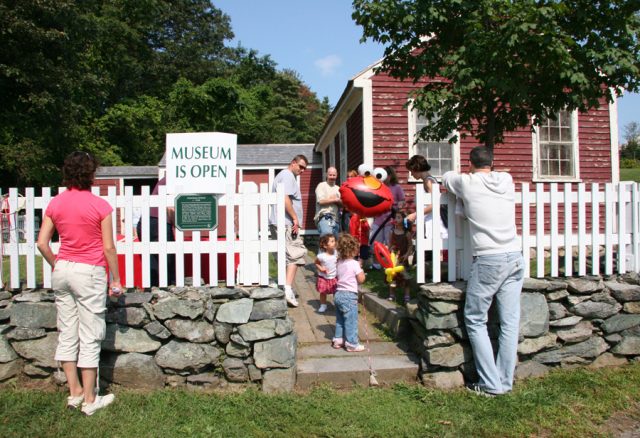
Brookline, Massachusetts proudly boasts of owning a school house that is over two hundred years old. It is the Putterham School which was built in 1768 at the juncture of Grove and Newton Streets (1897 atlas). In April of 1966 the school was moved from its original site on Grove Street to its present location at Larz Anderson Park. The actual move and plans for the building’s restoration were conducted under the direction of Race Architectural Restoration Enterprises, Inc. (R.A.R.E., Inc.). The Brookline Board of Selectmen and the Brookline Historical Society worked together for several years to accomplish the move. The Historical Society has in its possession a complete photographic and narrative history of the school, prepared for it by R.A.R.E., Inc.

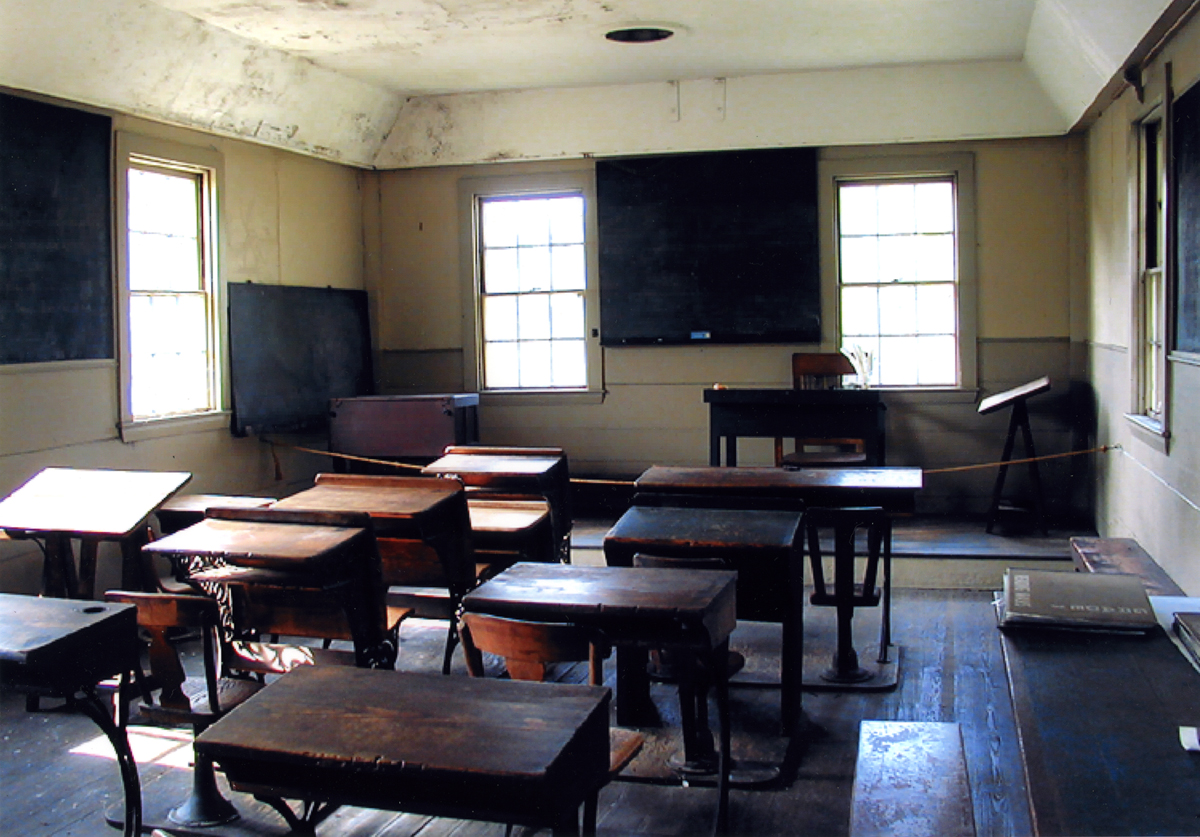
Of unusual interest in the building was a portion of plaster painted black on which a “number work lesson” had been written with white chalk by Miss Mary Elizabeth Hyde, for many years the teacher at Putterham School, and dated “Monday/October 18; 1897.” This was revealed when many layers of repair cloth had been removed from the walls. Miss Hyde’s handiwork is now preserved and protected by a glass covering.

The building, after being moved, was reset on a solid fieldstone foundation. Antique glass was found for the windows. Some structural repairs were made where deterioration and erosion made the building unsafe. The shade of red used to paint the exterior conforms to the color applied originally as revealed by paint scrapings.

Since its original construction in 1768, the school has been altered frequently, showing various styles and techniques in construction used during the eighteenth, nineteenth, and twentieth centuries. The original one-room school house was enlarged in 1840 by an addition to the rear. In 1847 a shed was built for storing coal or wood and providing an entry vestibule. According to town records, in 1855 the ceiling in the schoolroom was raised, the windows enlarged, and the desks and chairs repaired. The double privy was built around 1898, probably re placing an earlier single privy. There is some evidence that in 1938 the school was used temporarily as a Catholic church and at some time following World War II as a synagogue.

Mrs. Dean Peabody, Sr., the chairman of the Putterham School Committee of the Brookline Historical Society, and an alumna of Putterham School, wrote an article entitled “When I Went to School” that appears in the Proceedings of the Brookline Historical Society for 1959-1963. In that article she refers to the Putterham School as the “Newton Street School” and as the “Southwest Primary School.” Brookline historians have never quite agreed as to the original name of the school. Nevertheless, it is generally known as Putterham School.

In the article she describes the situation in mid-nineteenth century with respect to teachers’ salaries:

“In 1850 or 1851 there is a note in a school report that a music teacher could be hired for $75 per annum. In the report for the year ending January 31, 1857, the teacher at the Newton Street School received $250 for the year, and other primary and grammar school assistants, $350 to $400. A grammar school ‘master’ received $1400, the high school principal, $1800 and his assistant, $500.”

In depicting the general system of education and the curriculum at Putterham School in particular, she goes, on to say:

“A teacher’s life must have been an onerous one. One finds them having been under the watchful eye of one or another member of the School Committee, part of whose responsibility it was to visit, inspect, and, at the appointed time, examine the pupils. Often, when the result of this examination seemed to rate the teacher as inadequate, he, or more often she, would resign. Occasionally, this teacher would be discovered back on the job later. As no salaries were mentioned in those early days, one wonders which needed the other more, the school finding it difficult to replace the teacher or the teacher finding no other way to earn even the small salary then in vogue. Probably she was one of those who loved the work, always hoping to find a better way to get across the subjects supposed to be taught. A quotation from the school report of a hundred years ago tells of one of these examinations. ‘The examinations began at the Southwest Primary School (Newton Street School). The whole number of pupils during the year has been 32. The teacher reports her pupils to be unpunctual, but orderly. There are four classes in Reading and Spelling, five in Arithmetic, four in Geography, one class in Grammar; and fifteen children are taught to write.”

Mrs. Peabody’s vivid description of the building was as follows:

“The building was one room, with a huge barrel stove in the back. The iron chimney ran along under most of the length of the ceiling before turning at right angles to go through the roof. Still nearer the front of the room, a huge ventilator pierced the roof and ceiling, which must have made the temperature around the teachers desk a bit more comfortable than it had been before its installation. This school was originally built, according to school records, in 1768, although as early as 1713 permission was given to the residents of the south part of the town to build themselves a school house. In 1768, help in the building was offered and a teacher assigned. In 1839, it was enlarged. For 1854, I find this paragraph: ‘The Newton street house is large enough for the very small school it now contains; but the ceiling is so low, and the building so ill ventilated, that it Is unhealthy even for that small number. Justice to that district requires that an appropriation should be voted, sufficient to defray the expense of raising the roof, and also of providing it with comfortable modern desks and chairs, in place of the uneasy plank structures on which the children now sit.”
“This suggested work seems to have been done, as in the following year we read: ‘The ceiling has been raised eighteen inches; the windows have been enlarged; and the old uncomfortable desks and tables have been replaced by some which were formerly used in the schools in the Town Hall.’ I think the school, as I remember it, was about as these changes left it. We entered through a short, narrow hallway at the back of the school. This hall had hooks for clothes on one side and a shelf on the other, on one end of which was kept a large bucket of fresh water for drinking purposes. This was brought over from the high service pumping station next door each morning, Mr. Webber, engineer there, being the janitor for the little school. He was in league with Miss Hyde, I am sure, to make our days in that school some of the happiest and most worthwhile of any of our school days. Rudimentary sanitation was attempted. Each pupil was required to have an individual drinking cup. Wood for the huge stove was kept outside in a sort of closet in the hall, west of the entrance. If the day’s supply which was left in the morning beside the stove gave out, the older boys could renew it. Then, still further along at the end of the hall, was our one out-of-door facility. Another was added during the years I was there.”

The present use for the schoolhouse is an educational museum showing how a one-room school was set up, displaying books, teaching aids, and various items of schoolroom equipment.

Putterham School
Larz Anderson Park
Brookline, MA

Tel.: 617-566-5747
Emailbrooklinehistory@gmail.com
URL: BrooklineHistoricalSociety.org

Hours:

12:00 p.m. –  to 3:00 p.m.
2nd & 4th Sundays of the month
June – October

 

Widow Harris House

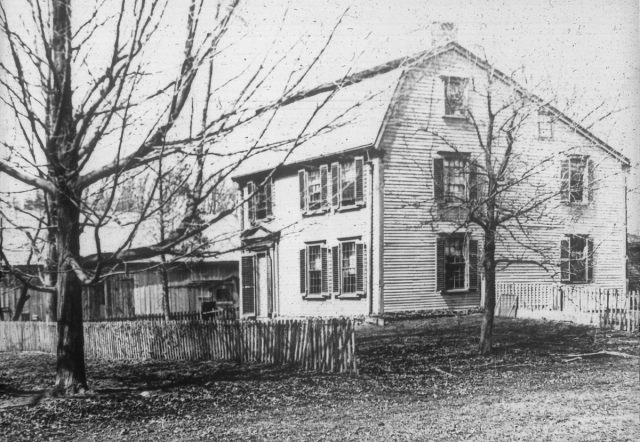
The Widow Harris House was named after Hannah Winchester Harris, the wife of its first owner, Timothy Harris.

It was built between 1772 and 1796 in what is now Larz Anderson Park and was used later by the Andersons to house their staff.

Widow Harris House
Newton & Grove Streets
Larz Anderson Park
Brookline, MA

Tel.: 617-566-5747
Emailbrooklinehistory@gmail.com
URL: BrooklineHistoricalSociety.org

Hours:

not open to the public


Edward Devotion House

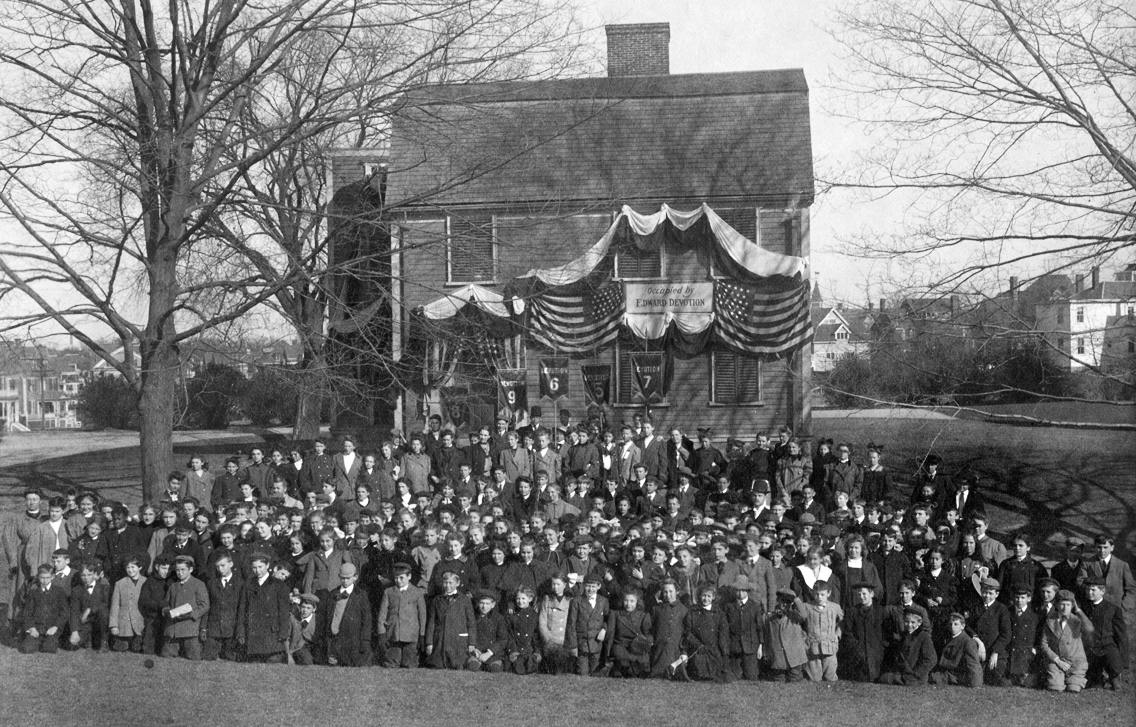
The Edward Devotion House is one of the oldest colonial structures in Brookline. Owned by the town and administered by the Brookline Historical Society, it is a fine example of mid-eighteenth century architecture. Edward Devotion (1621-1685) settled in Brookline around 1650. At that time, Brookline was a colonial farming community known as Muddy River. Devotion’s acreage along Harvard Street included apple orchards and pastureland for sheep and cattle. His son, Edward Devotion, Jr., left a bequest to the town for public schooling. Its legacy is the Devotion Elementary School, which today surrounds the house on three sides.

Although the Devotion House dates from around 1740, recent research has identified within it a house frame that dates from around 1680. This older structure may have been erected by Edward Devotion, Sr. His grandson, Solomon Hill, probably built the circa 1740 structure after inheriting the Devotion estate. The house passed out of the Devotion family in 1762. It subsequently had a variety of owners and occupants. Among them were tavern keeper William Marshall, who may have used the apple orchards to supply cider to the famous Punch Bowl Tavern in Brookline Village, and financier Israel Thorndike and farmer George Babcock, who are remembered in the names of nearby streets. The Devotion House was purchased by the Town of Brookline in 1891.

The Devotion House contains eighteenth- and nineteenth-century furnishings and Brookline-related artifacts. Some of the most significant objects are gifts of the Devotion family. Others are associated with early Brookline families, such as the Goddards.

In addition to being a museum, the Devotion House serves as the headquarters of the Brookline Historical Society. The society is dedicated to the preservation and interpretation of Brookline history. It was founded in 1901 and began meeting in the Devotion House that same year.

Edward Devotion House
347 Harvard Street
Brookline, MA 02446

Tel.: 617-566-5747
Emailbrooklinehistory@gmail.com
URL: BrooklineHistoricalSociety.org

Hours:
12:00 p.m. to 3:00 p.m.
1st & 3rd Sundays of the month
June 21st – October


All Politics Is Local: The Brookline League Of Women Voters

While they had accomplished their goal, suffragists knew that their work was far from over once the 19th Amendment was ratified in 1920. Carrie Chapman Catt advocated for a “league of women voters to finish the fight.” Catt wanted women to be well informed and work together on issues. She called the possibility of women working together as a cohesive, nonpartisan group an opportunity.

First led by Maud Wood Park, the League of Women Voters sought to inform citizens (male and female) about the issues. The League also set out to establish legislative goals for a range of issues. The idea was that a better-informed electorate would lead to better-formed policies. A nonpartisan group, the League is still going strong today.

Though the League of Women Voters operates as a national organization, there are state and local leagues as well. In Brookline, the League of Women Voters has the same goals as the national organization: to educate voters and work on vital issues of concern to members and the public. Supported by dues and donations, the LWVB conducts voter service and education activities and advocates for positions on issues its members have studied reached consensus. The LWVB uses grassroots organization to both inform the public and to advocate for policy changes.

In order to keep up to date on the issues, the LWVB has a monthly “2nd Friday at Panera” in Coolidge Corner at 9:30 a.m. Together, members discuss issues like education, bicycle paths, and the economy. All are welcome, so I encourage you to come—and bring a friend!

The LWVB has other events as well. On March 13 the, the LWVB had their annual Day on the Hill. This year’s theme was “Democracy is Not a Spectator Sport” and featured Rep. Thomas Conroy and Elizabeth Saunders of Clean Water Action as speakers. Afterward, Brookline League members had lunch with their state representatives.

Getting involved with a local branch of the LWV is important, even when it is not an election year. At the local level, there are always local elections and events. Being informed about issues and candidates is important—after all, at the local level, they may affect you the most.

To learn more about the League of Women Voters of Brookline, go here or “like” our Facebook page here. And do not forget to vote on April 30th!

Written by Chris Chanyasulkit, Commissioner (Asian American Commission, MA Commission on the Status of Women, Brookline Commission for Women), BAAFN Steering Committee Member, Education Board and Joint Policy Committee Member of the American Public Health Association, TMM Precinct 13, Emerge Massachusetts 2012.


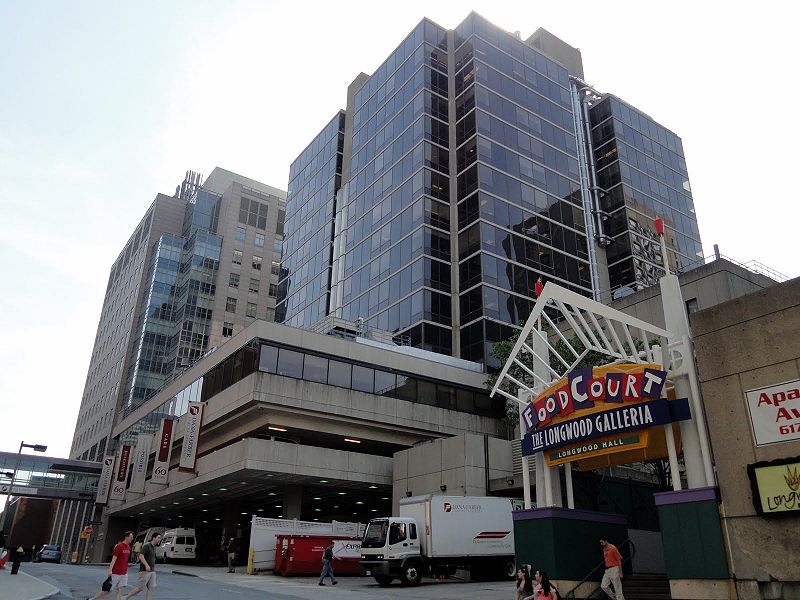
Dana-Farber Cancer Institute

Dana-Farber Cancer Institute
44 Binney Street
Boston, MA 02115

Tel.: 617-632-3000
URL: Dana-Farber Cancer Institute

Established in 1947, the Dana-Farber Cancer Institute, simply known as Dana-Farber to Bostonians, began as a children’s cancer center, but today it serves patients of any age or condition. The hospital employs up to 4,000 professionals who cater to the 300,000 patients that visit Dana-Farber each year. With an emphasis on AIDS research, the Dana-Farber Institute is supported financially by the federal government, and is one of twenty hospitals in the country recognized by the National Centers of Health as a Center for AIDS Research. The hospital stresses the importance of cancer protection, prevention, and awareness throughout the Boston and New England area and has been home to ground-breaking cancer research. For example, Dr. Farber, the founding father of the hospital, was the first to put a kidney tumor into remission in the late 1940s. Widespread use of the procedure increased the national rate of cure from 45 to 80 percent.

In 1948, a radio show played from the Children’s Cancer Research Foundation (the current Dana-Farber Institute) from the hospital room of a boy who was suffering from leukemia. After this special, bounties of donations filtered through the hospital in order to buy the boy, named Jimmy, a television so he could watch the Boston Braves baseball team, thus creating the Jimmy Fund. Today, the Dana-Farber Institute and the Jimmy Fund are still closely related. The hospital is also vigorously involved in community outreach, pairing up with nearly 30 public high schools in the area to provide a hands-on experience to many students interested in the field of medicine. As an affiliate of the Harvard Medical School, the Dana-Farber Institute seeks to provide excellent educational opportunities to the future’s most promising medical experts.

Dana-Farber puts patient and family care among its top priorities as a medical institution. This was recognized in a video produced by the American Hospital Association and the Institute for Family-Centered Care entitled “Patient- and Family-Centered Care: Partnerships for Quality and Safety”. The standard for patient and family care at Dana-Farber is established by the Adult and Pediatric Patient and Family Advisory Councils, a unique addition to the hospital’s makeup. This council is where executives and staff meet with patients and families in order to ensure a compassionate environment at the hospital throughout the patient’s stay.

The Dana-Farber Cancer Institute can be reached by the MBTA by taking the “D” line to Longwood Avenue, the “E” line to Longwood Medical Area, or the Orange line to Ruggles Station and take the bus.


We The People (And Corporations)

Where is it written in our Constitution that Corporations have the same rights as “we the people”? Yet, our Supreme Court has ruled it to be the case! The Supreme Court has also applied the provision within the Constitution that allows for the “arming, and disciplining, the Militia” to rule that our citizens have the right to arm themselves as if they may be called upon at any time to step into a video game and fight-off an invading foreign enemy.

Yet, here in Brookline, our politically involved citizens have hamstrung our police force in the use of closed circuit TV (CCTV) in fighting local crime.

The Wall Street Journal denigrates the “Occupy Wall Street” people yet refuses to realize that these people feel that they have no control over their own lives; that they are being controlled by a small group of people, acting out of self-interest.

What is to be done?

We can work towards ratifying a Constitutional Amendment to change the “Corporations are People” ruling. We have a much better chance of success with affecting this change then we do with over-ruling what the NRA calls our rights to bear arms.”

We can write our Selectmen and tell them that we are in favor of CCTV as a tool in crime prevention.

However, all these things take time and effort and we are all just too busy making a living, paying off the mortgage, saving for our kids to go to college. And so the cycle of power continues. The base of each of our two political parties continues to call the shots, to determine the issues, the candidates that will run, the people who will be nominated to the Supreme Court and the laws that will be enacted – whether they are in the best interest of the people or not.

I for one am heartened to see that there are people throughout the world willing to “occupy” a piece of their country in order to affect the kind of change that we here in the US were promised in the last national election and I am going to find the time to go into Boston and tell the occupy Boston people that they have my support!

Ray Hoffer


Karleton Fyfe Killed At 31

Karleton Fyfe
Karleton Fyfe

Karleton Fyfe’s mother had to be bedridden for the six months before he was born; he seemed to be in a hurry to get into the world.

There was so much to be excited about. Take the birth of his own son. He and his wife made it a group project. They sent family and close friends a video titled “It’s a …” showing them going for the sonogram, and at the end opening an envelope in which the doctor had written “boy.” When Jackson turned 1, they asked the same group to write something and seal it for him to open when he turned 18.

Then, because Mr. Fyfe heard that the terrible 2’s were caused by frustration at not being able to communicate, he taught his son sign language. “He was really living it,” said Tristin Laughter a longtime friend of the couple.

Mr. Fyfe, 31, really lived everything, applying the same boyishness and determination whether he was mastering Steve Martin routines or the curveball as a kid, or tackling projects as a senior analyst at John Hancock — the job for which he was traveling on American Airlines Flight 11.


The Park School

The Park School
171 Goddard Avenue
Brookline, MA 02445

Tel.: 617-277-2456
URL: The Park School

History:

Park’s roots go back to 1888, when Miss Caroline Pierce began a proprietary school on Walnut Street in Brookline. In 1923, it was incorporated and named to commemorate Julia Park, principal from 1910-1922. A gift of land from Dr. and Mrs. James M. Faulkner, former Park parents and grandparents, provided the opportunity for the School to move in 1971 from Kennard Road in Brookline to a 34-acre, country-like setting near Jamaica Pond and opposite Larz Anderson Park.

Mission:

The Park School is dedicated to excellence in education.

The cornerstone of Park’s program is academic excellence, combining both high standards of scholarship and the encouragement of each child to develop to his or her greatest potential. Our school community fosters a nurturing environment in which children develop curiosity, express creativity, appreciate the value of hard work and discipline, and experience the joy of learning. Park’s faculty encourages each student to strive for intellectual, physical and moral growth and to become contributing members of the community.

Park is committed to being a metropolitan, coeducational, day school of diverse races, religions, cultures, and backgrounds. Central to its mission is an appreciation of similarities and differences of perspective and the interdependence of all people. As a family school, Park is a community in which the dignity of each child, teacher, and parent is respected.


Beaver Country Day School

Beaver Country Day School
791 Hammond Street
Chestnut Hill, MA 02467

Tel.: 617-738-2700
URL: Beaver Country Day School

School Description:

Beaver Country Day School is a private, college preparatory school for students in grades six through twelve and is accredited by the New England Association of Schools and Colleges. Originally founded on a focus on the progressive education model of the American philosopher John Dewey, the school moved to its present location on Chestnut Hill in the 1920s. The school enrolls about 450 students each year, with classes averaging about 15 students per class and one hundred percent graduates going on to a four-year college or university. The school prides itself on its diversity, as about 25% of both students and faculty are of color and its students collectively speak over 20 languages besides English at home. Notable alumni of Beaver Country Day School include actress Eliza Dushku, Temple Grandin, Pulitzer Prize winner Lucinda Franks, and Glee writer/producer Brad Falchuk.

Campus Setting:

Beaver Country Day is located on a 17-acre campus in the village of Chestnut Hill in Brookline. It is only three miles west of the city of Boston and is easily accessible through public transportation via the Chestnut Hill stop on the “D” Green Line (to Riverside). The campus includes a library, an athletic field, an art gallery, a performing arts center, and a gymnasium.

Academics:

The academics at Beaver Country Day School strive to go beyond mere mastery of academic content and problem solving; Beaver also prepares students for future professional success and growth by giving them advanced thinking skills by approaching academics from many different perspectives and approaches. The school focuses extensively on honing writing, communication, and critical thinking skills from this foundation, which they call Kaleidoscopic Thinking. Beaver also has a program for the upper school, created by collaboration with MIT and Harvard, called “NuVu”. “NuVu” is built on the MIT studio model of innovation learning and its primary goal is to challenge students and push their creative and analytical limits. Finally, the school also emphasizes community service and social change, following the footsteps of John Dewey, with its Hiatt Center for Civic Engagement.

Clubs and Activities:

Beaver Country Day School believes that extracurricular involvement is absolutely essential for academic, personal, and social achievement. Beaver has an athletic program available to students in all grades seeking to improve their athletic skills and achieve personal growth, both individually and collectively. The school also recognizes the importance of the arts and the cultivation of creativity and self-expression; all middle school students are required to take an art course every trimester and upper school students must take at least two art classes before graduating. Arts at Beaver Country Day include music, theater, and visual arts. Many of the popular clubs and activities of Beaver students include student council, Mock Trial, robotics, the Entrepreneurs’ Club, and the online student-run newspaper, The Beaver Reader.


The Chestnut Hill School

The Chestnut Hill School
428 Hammond Street
Chestnut Hill, MA 02467

Tel.: 617-566-4394
URL: The Chestnut Hill School

School Description:

The Chestnut Hill School is an independent, co-educational elementary school located in the Chestnut Hill village that consists of a pre-school program for children starting at age 3, a Kindergarten, and grades one through six. The school, grounded in its 150-year-old history, is driven by a three-part mission of academic excellence, diversity, and community. It enrolls about 275 students in its pre-school program through grade six and helps place its graduating students into middle school.

Campus Setting:

The Chestnut Hill School is located in the Chestnut Hill village of Brookline, about a half a mile away from the Boston College campus.

In addition to the main classroom buildings, the campus offers many great facilities, including a heated outdoor swimming pool, gymnasium, music room, woodworking shop, and computer lab.

Academics:

Academic excellence is one of the three tenets of the school’s mission. The Chestnut Hill School works hard to create an environment for its students that not only fosters an acquirement of knowledge and skills but also encourages critical thinking and a love for learning. The curriculum at the Chestnut Hill School includes basic skill development for the lower school and a culmination of the CHS experience for the upper school. The upper school academic experience is very well-rounded, covering areas from language arts to science to woodworking in order to prepare students for their next steps at middle school.

Clubs and Activities:

The Chestnut Hill School recognizes the importance of extracurricular activities in a well-rounded education. Students in the lower school participate in RoboLab in their last year, which introduces them to technology and engineering as they prepare to make their transition to the upper school. Students in the upper school are part of the Athletics Program, which teaches important fitness and teamwork skills, and the Leadership Program, which reflects the Chestnut Hill School’s commitment to community involvement and preparation for the next steps beyond CHS. There is also a School for Music that is open to current Chestnut Hill students, which provides lessons for over 14 different musical instruments and fun music workshops.


Brimmer And May School

Brimmer and May School
69 Middlesex Road
Chestnut Hill, MA 02467

Tel.: 617-566-7462
URL: Brimmer and May

School Description:

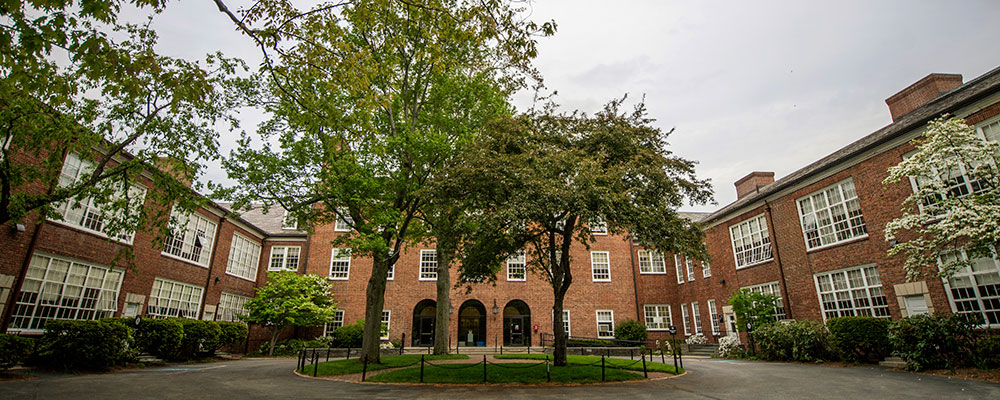
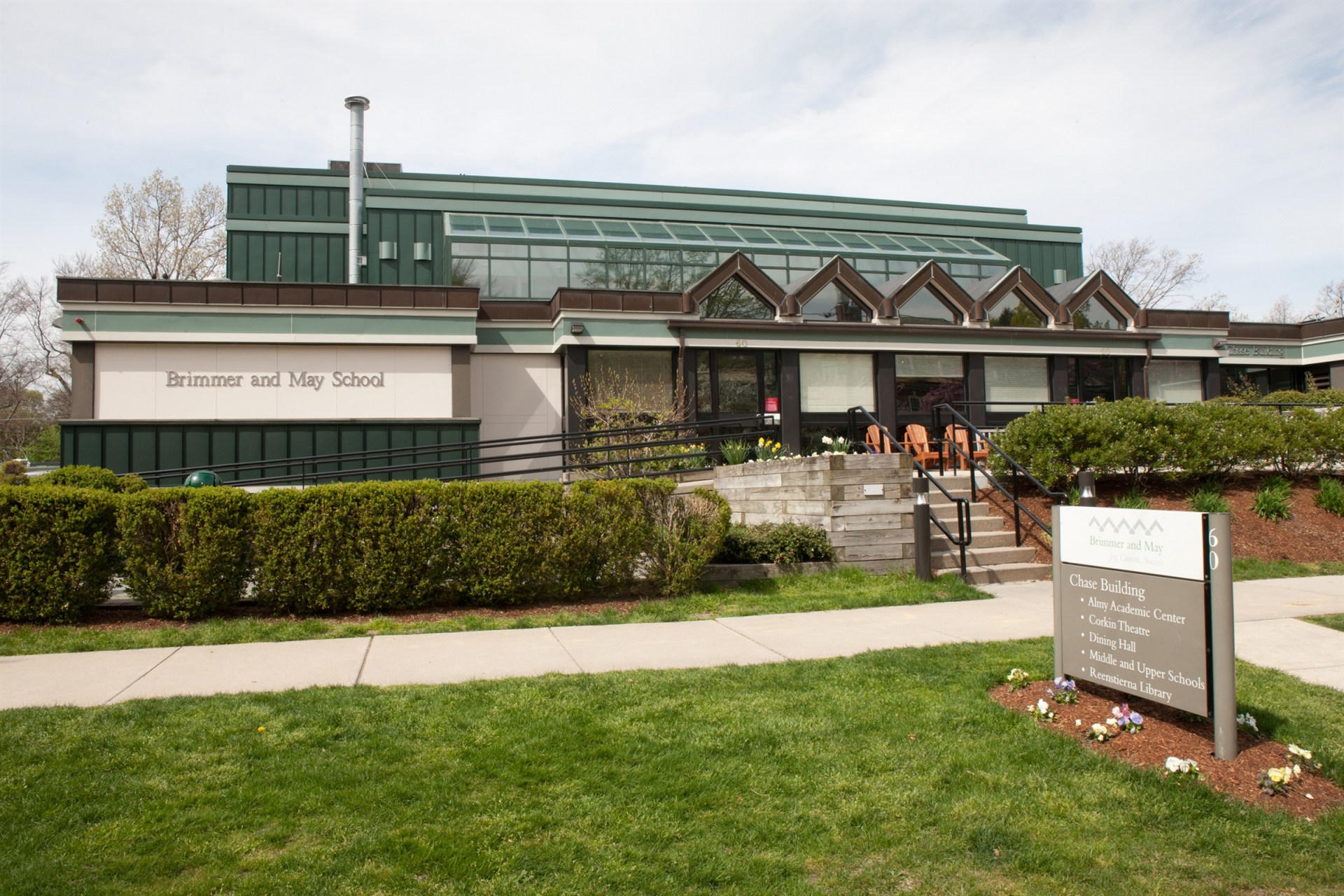
Brimmer and May School is a private school located in the Chestnut Hill village of Brookline; it enrolls students from pre-Kindergarten through twelfth grade. Although Brimmer and May was an all-girls school for about 50 years since its founding, the school became a co-educational institution in 1992 and has enrolled both males and females since. The school contains about 400 students and 50 faculty members, enabling a small 20:1 student to faculty ratio.

Brimmer and May School emphasizes active learning and encourages students to approach their education with joy and responsibility by becoming leaders inside and outside the classroom. The school is also quite diverse as 20% of the students are international and 22% are U.S. students of color.

Campus Setting:

The campus of Brimmer and May is located in Chestnut Hill close to the Boston College campus.  Brimmer and May, which occupies a two-block stretch of Middlesex Road, consists of both lower school and upper school buildings, which include a visual arts center and a library.

Academics:

The academic mission and philosophy for Brimmer and May varies throughout the lower school, middle school, and upper school. The important development of young students’ intellectual, physical, social, and emotional skills is an academic emphasis in the lower school. The lower school also has several unique programs, such as the Afterschool Music Program and the Environmental ColLab. Students in the middle school build their academic knowledge and skills while simultaneously becoming both self-motivated and self-disciplined; the unique programs for the middle school of Brimmer and May include a 7th grade trip to Washington, DC and an Outdoor Education Program. Finally, the upper school encourages students to challenge themselves intellectually while also aiming to mimic a college academic environment in some areas. Brimmer and May upper school offers a variety of AP courses and a rigorous Honors Program. Furthermore, all seniors are required to complete a thesis, which they defend in front of a panel of faculty and classmates.

Clubs and Activities:

Community service is at the heart of the Brimmer and May mission and students at all grade levels serve their community. While the students in the lower and middle schools participate in community service plans designed by the school, students in the upper school can choose in what way they would like to help their community as long as they complete the 40-hour requirement. Brimmer and May has 25 varsity sports for the upper school, and the lower and middle school students are required to participate in physical education every year. There are also art programs for each grade level and many clubs in which students can participate outside of the classroom.


Parking

Daytime Parking: Between 6:00 a.m. one day and 1:00 a.m. the next day, it is illegal to park on the same street in Brookline for longer than 2 hours (excluding Sundays and public holidays).

Overnight Parking: Unless approved by the Transportation Board, between 2:00 a.m. and 6:00 a.m. every day drivers are not permitted to park on any Brookline street or town-owned parking lot for longer than 1 hour.

Snow Emergency: If the town of Brookline has declared a Snow Emergency, no cars may be parked on the streets. Snow Emergencies are broadcasted on local media channels, and can also be found by calling the DPW at 6177302610.

Guest Overnight Parking: Brookline residents can obtain overnight parking passes for their guests in one of the 83 spaces specified for this purpose. The pass works from 11:00 p.m. to 8:00 a.m. the next morning. However, it is not guaranteed that a guest will be able to find a spot close to their residence. Spots are available in the lots on the following streets:

• Babcock Street
• Kent/Station Street
• Green Street
• Fuller Street
• Beacon Street Median (Washington Square)
• Webster East Street

The overnight guest passes can be purchased at the meter stations in the above lots after 6:00 p.m. of the day that the guest wishes to park overnight.

Public Parking in Commercial Areas: Although all of Brookline’s commercial districts are accessible by MBTA bus and trolley lines, there are areas for public parking. Meters are available on nearby streets close to the following commercial districts:

• Coolidge Corner
• Brookline Village
• St. Mary’s/Lower Beacon Street
• Putterham/Chestnut Hill
• JFK Crossing/Washington Square

Meter rates and hours are different depending on the location, but are always free on Sundays and major holidays. Most of the meters allow for 2-3 hour parking, with some that are for longer as well.

Red Sox Parking: Those looking to park in Brookline on Red Sox game days can park all along Beacon Street between St. Mary’s and Hawes Street two hours before the game until 10:00 p.m., Monday through Saturday. These meters are the closest to Fenway, but are also more expensive—about $22 for 4 hours. Select meters near St. Mary’s street will only be $1 per hour, but with a two-hour limit. The town of Brookline advises that if you are looking to park here, drive further down Beacon Street, park, and then take the Green Line to the ball park.

Resident Overnight Parking: Because of the overnight parking ban, residents may have problems with parking. To remedy this, Brookline has reserved a total of 309 spaces in 11 lots, as well as the Courtyard Marriott Hotel. Some of the Resident Overnight spaces are available in the following lots:

• Beacon Street Median
• Centre Street West
• Centre Street East
• Kent/Webster Place
• Babcock Street
• Courtyard Marriott Hotel
• John Street
• Fuller Street

The cost for a space is $100 per month, and is billed to your Brookline address. Residents with permits can park between 9 pm and 8 am daily, and all day on Sundays and holidays. Permits are extended to those with a Brookline address, however, exceptions can be made for company cars, full time students, and lease vehicles.

Resident Permit Parking: Brookline residents with a permit can park for over two hours on a residential street between 6:00 a.m. to 2:00 a.m.. Permits cost $25, and are valid for one year. Those without a permit can only park up to two hours, so it discourages people from parking on your residential street for hours. However, the following streets do not qualify for Resident Permit Parking:

Adams Street, Beacon Street (999 to 1441, 1609 to 1730), Boylston Place, Boylston Street, Chapel Street, Copley Street, Crowninshield Road, Elba Street, Harvard Street, Hayden Road, Holden Street, John Street, Mountfort Street, Pearl Street, Pierce Street, St. Marys, Station Street, Webster Place, and Webster Street.

Brookline Meters: Recently, Brookline has updated its meter system. New renovations include:

• multi-space meters on St. Mary’s Street, Coolidge Corner, Washington Square, and JFK Crossing
• extended hours up to 8 pm for high-demand areas
• an increase of $1 for all 2, 3 and 5-hour-meters
• new methods of payment in meter machines, such as coins, credit cards, cash, and Brookline cards.


Brigham And Women’s Hospital

Brigham and Women’s Hospital
75 Francis Street
Boston, MA 02115

Tel.: 617-732-5500
URL: Brigham and Womens Hospital

The Brigham and Women’s Hospital began as the Boston Lying-In Hospital in 1832 and earned a reputation for excellence in maternity care that still stands today. This hospital was a pioneer in servicing women who could not afford medical care to their homes. In 1875, it became the Free Hospital for Women (that will later become the Boston Women’s Hospital), which sought to service women who needed surgery or direct medical attention particular to their sex, according to their original mission statement. In 1911, the Brigham hospital established itself as a medical center offered for those who could not afford privatized care. In 1974, the Boston Women’s Hospital, the Peter Bent Brigham Hospital, and the Robert Breck Brigham Hospital formally collaborated and soon opened the doors of the Brigham and Women’s Hospital in 1980.

The Brigham and Women’s Hospital has been a trailblazer in the medical field throughout history and continues to be so today. With the focus on women’s health, the Brigham and Women’s Hospital is home to the Mary Horrigan Connors Center for Women, which is intended for obstetrical and newborn care with a focus on family care. The center features a Newborn Intensive Care Unit, postpartum and antepartum care rooms, and birthing suits. About 9,000 babies are born at Brigham and Women’s Hospital each year.

Today, womens care is not the only attribute that Brigham and Women’s hospital is known for. It was home to the first heart transplant in New England in 1984 and the first lung transplant in Massachusetts in 1992. It is well known as a teaching affiliate for Harvard Medical School and boasts state of the art technology for research and clinical studies. The Brigham and Women’s Hospital is a top recipient of the National Institutes of Health research grant, receiving over $400 million for research. It has been ranked in Solucient’s Top 100 Hospital ranking for eight consecutive years, and is the only hospital to do so. Brigham and Women’s Hospital is a pioneer in transplants for lungs, hearts, kidneys, and even bone marrow. It is also well-known for the work it does in cardiovascular research, rheumatic and arthritic disorders, and cancer research.

The Brigham and Women’s Hospital can be reached by “T” or bus, just get off at Brigham Circle on the “E”  line or the Longwood stop on the “D” line. Buses that run to Brigham and Women’s are 66, 65, 60, 47, 39, 8, CT2, and CT3.


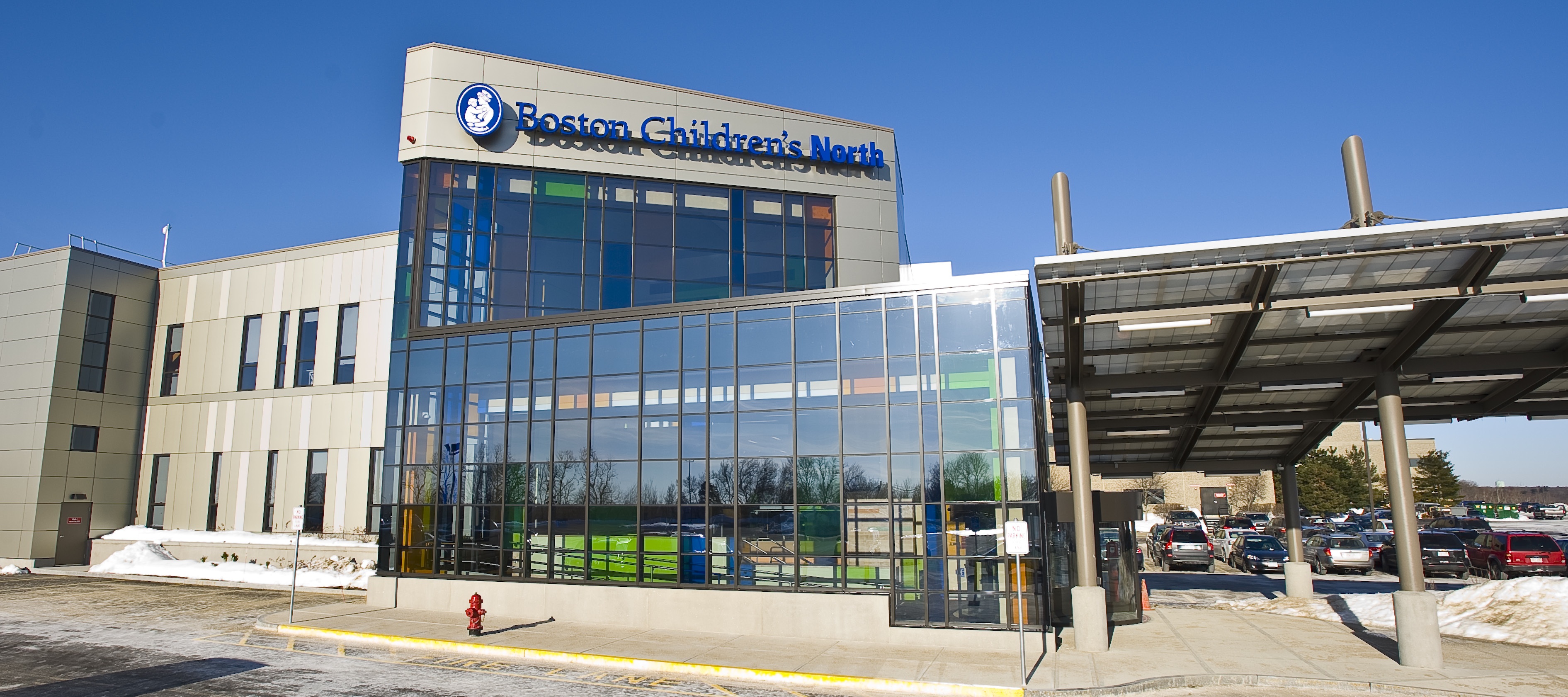
Boston Children’s Hospital

Boston Children’s Hospital
300 Longwood Avenue
Boston, MA 02115

Tel.: 617-355-6000
URL: Boston Children’s Hospital

The Boston Childrens Hospital is one of the nation’s largest hospitals for pediatric care. The hospital cares for children up to 21 years of age, but it also has an Advanced Fetal Care program in which care is given to parents who believe there may be complications with the fetus. The Boston Children’s Hospital boasts over 1,000 medical staff members; many of these professionals are faculty members at Harvard Medical School. Finally, with over 500,000 visits a year, the Boston Children’s Hospital of is one of the most active hospitals for pediatric care in all of New England.

Established in 1869, Boston Children’s Hospital is host to the world’s largest pediatric-based researchcenter. The Children’s Hospital has excellent research facilities, like the John F. Enders Pediatric Research laboratory, which is awarded the most federal funding out of any pediatric medical institution in the country. The research and clinical studies conducted in the hospital are funded with about a $225 million budget combined.

Boston’s Children’s Hospital has received numerous awards for its stellar contributions to the pediatric field of medicine. According to U.S. News & World Report, its ranks at the top in more specialties than any other medical center in the United States, with specializations in Kidney Disorders, Neurology, and Heart Surgery, to name a few. Boston Children’s Hospital is also unique in that it sponsors programs, like “Healthy children. Healthy communities”, which seek to educate children on community-based health concerns. Boston’s Children’s Hospital takes an audit of the community needs every three years to determine what problems are facing the children of Boston with particular focus on asthma, nutrition, injury protection, mental health, and fitness in hopes of making programs and services more available to all members of the greater Boston area. Through these programs, Boston Children’s Hospital is hoping to make children’s health in an urban environment a concern of legislators.

To get to the Children’s Hospital of Boston by MBTA’s subway train take the “D” line to Longwood Avenue or the “C” line to the Longwood Medical Area stop. Buses that stop near the hospital are: 8, 8A, 39, 47, 60, 65, CT2, and CT3.


Roulette

[cardgame title=european-roulette-gold id=749]


JFK Crossing Shopping

JFK Crossing is a neighborhood just north of Coolidge Corner along Harvard Street. It is named for John F. Kennedy, who along with brother Robert, was born at 83 Beals Street.

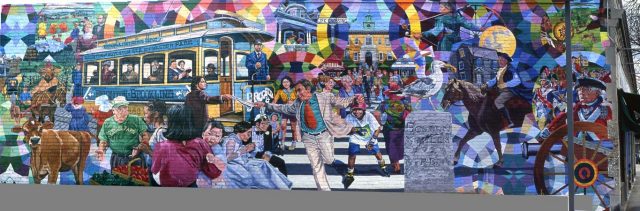
Originally farmland, the area was built up in conjunction with Coolidge Corner. A visual history of the area is recorded on four large, outdoor murals on Harvard Street, paying homage to the Jewish immigrants that settled there in the early 20th century as well as the more recent Asian and Russian immigrants who now call JFK Crossing home.

JFK Crossing provides a great deal of shops and services. The neighborhood includes many national chains. There are also many independently owned craft stores and shops, where shoppers can find a variety of gifts, music and art. JFK Crossing also has many nail and hair salons, dry cleaners, and an array of kosher restaurants.

Getting to JFK Crossing from Boston

By subway, take the C “Cleveland Circle” train on the green line to the Coolidge Corner stop and walk up Harvard Street for approximately 5-7 minutes. Or take the B “Boston College” train to Harvard Avenue stop and walk south on Harvard Street for approximately 10 minutes.

By bus, take the #66 bus from Dudley Station to Harvard Square via Allston and Brookline Village.

Metered street parking is available on Harvard Street.


Brookline Village Shopping

Located around the intersections of Harvard Street, Washington Street and Boylston Street (Route 9) just west of the Emerald Necklace, Brookline Village is the town’s oldest shopping and business center. Originally a farming hamlet known as Muddy River, the area became a transportation hub with the construction of the Boston and Worcester Turnpike in 1806 along the current Route 9. In 1844, the town hall was relocated from the old Town Green area (around the reservoir today) to its current location on Washington Street. The area was further built-up following waves of German and Irish immigrants starting in 1848.

Following the Civil War, the Village expanded up Washington and Harvard Streets. The wooden buildings lining Brookline Village were replaced with panel brick buildings. This style would become extremely popular for the commercial buildings in the neighborhood. In addition, residential properties saw an increase in development, with houses built in the Queen Anne, Colonial Revival and Shingle styles throughout Aspinwall, Kent and Cypress Streets. In contrast, triple-decker style homes were built on Boylston, Pearl and Emerald Streets.

Historic firsts involving Brookline Village include the first public bath and municipal gymnasium, as well as the building of the first electric car in America in 1891 at the Holzter-Cabot Company founded by German immigrant Charles Holzter.

Today, the Village is home to many restaurants, antique shops, children’s stores and cafes. It is also home to Brookline’s Town Hall, Police Headquarters and the main branch of the Brookline Public Library. Although much has changed since its inception, Brookline Village maintains the look and feel of a traditional village, blending old and new businesses into one neighborhood.

Brookline Village offers an array of places to shop. There are local book stores, spas, boutiques, and toy stores. Village Baby offers a collection of baby clothes, while Sara Belle has beautiful clothes for women. There are many services available such as cleaners, jewelers, florists, barbers, and hair salons, including Village Hair Design. Gateway Arts offers an interesting craft store and art gallery. A variety of yoga and Pilates studios are also available in Brookline Village.

Getting to Brookline Village from Boston

By subway, take the D “Riverside” train on the green line to the Brookline Village stop.

The #66 bus (Dudley Station/Harvard Square) runs along Harvard Street and stops in the Village.

Metered street parking is also available.